The first time I ever made limoncello I fell asleep on the couch, drunk, halfway through the process.
Freshly twenty one and living on my own in a new city, I hauled ten pounds of lemons and a handle of vodka up the windy street to my shoebox apartment. It was one room, so small that the futon couch slotted under the loft bed with barely enough room to stand up. The bathroom door was just a sliding piece of wood, and the kitchen was both the living room and the closet. The amenities were unremarkable, except that someone had taken a usual galley kitchen and bisected it pettily, like a kid cutting a cookie in half to share. Half sink, scrap of counter, minifridge wedged in at an angle so the door only opened halfway. The largest thing was an obnoxious microwave oven that could fit a medium-sized dog and took up most of two cabinets. Several birthday cakes got baked in that spaceship of an appliance. It had a rigid shelf for baking, which distributed heat so unevenly I would have to manually rotate the contents lest the cakes be burnt on one corner and raw goo in the other. But it was a sufficient limoncello laboratory.
I stuffed two leftover pasta sauce jars with lemon peels, packed them down tight, and covered the peels with sharp vodka to the very brim. The clean lemon scent filled the space quickly and lingered. With the lid on I shook the jars and placed them on a high shelf to sit for a few weeks. Occasionally I would take a jar out to shake it again and watch how the color changed from pale and watery to a deep golden, the peels slowly being drained of vibrance. But mostly they waited undisturbed until the day finally came.
Limoncello first entered my orbit at sixteen at a restaurant in Italy. The owner knew a friend of the family who we were staying with there, and brought out a rattling platter of little glasses and several bottles of dandelion yellow liquid. I’ve always looked older than I am, and at that time the kids on this family trip were allowed to drink whatever we could get away with. Being it Italy, that was everything. We drank.
Lemon and sunshine, summertime and fire. Sweet and cool and tart, it did not taste of alcohol but burned pleasantly going down the throat. More bottles were brought out of different cellos for tasting. I am sure I tasted them all, and had something to say about each one. I remember most of all the train ride back from dinner. I was exhausted from a long day of walking and the alcohol made my face and chest feel on fire . Looking back years later, I realize we did the equivalent of five or six shots at that dinner. No wonder I lit up lobster pink the way really pale people do.
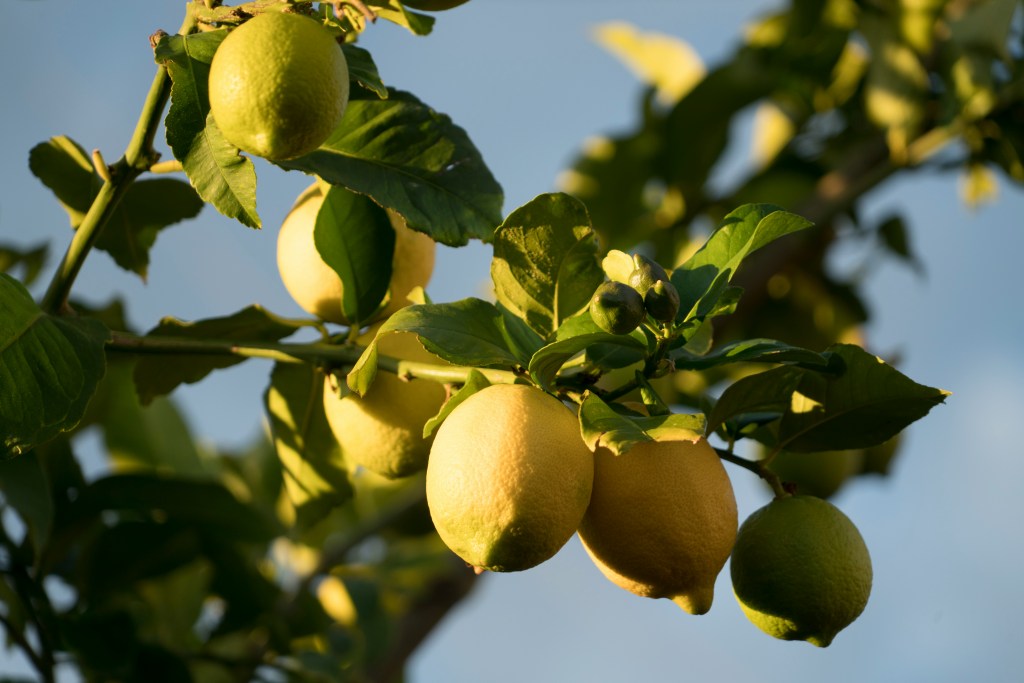
I wasn’t thinking about those consequences on that dreary November day when the lemon peel and vodka had finished their long infusion and were ready to be bottled as holiday presents. I was thinking about sunshine and fire to see me through the endless northwest rain. Real limoncello is made with specific heritage lemons grown in Amalfi or other regions of Calabria or Campagnia. To call something “limoncello” and sell it internationally there are regulations and strictures, mostly to do with the lemons not the actual alcohol. My Trader Joes lemons were cutting a big corner. But I saw little unmarked bottles sitting dandelion yellow in markets all over Rome, and no one turned their nose up at them. People all over make their own limoncello with their own lemons- I told myself I was emulating a time honored tradition. The lure of sunshine sweetness and high alcohol content compelled me.
Being the serious cook I took myself to be, I made sure to taste my work throughout the process. Measuring the sugar with tiny sips batch by batch my sink rapidly filled with every spoon in my possession. By the time my collection of Goodwill jars and bottles was filled there were splashes of liquor covering every surface and the room was starting to rock. I sat down just for a second- and woke up two hours later when the sun had set and the kitchen was seething with black ants.
They came from the baseboards, from the window, literally from cracks in the countertop. Hundreds of little soldiers on a single-minded quest to capture the sticky boozy stuff and bring it home in tribute. Some of them died for their conquest, drowning in the larger puddles of liquor where I had been sloppy with the funnel. That is the last thing you want to see after coming out of an alcohol induced nap. I was horrified and the next minutes were violent. I will spare the details. Luckily all the bottles or cello were sealed, and survived the attack to go on to gather dust in many relatives’ cabinets. The results were a pale imitation of the limoncello I had those years ago- supermarket lemons being no match for heritage amalfi lemons- but I was inordinately proud of my little bottles of liquor.
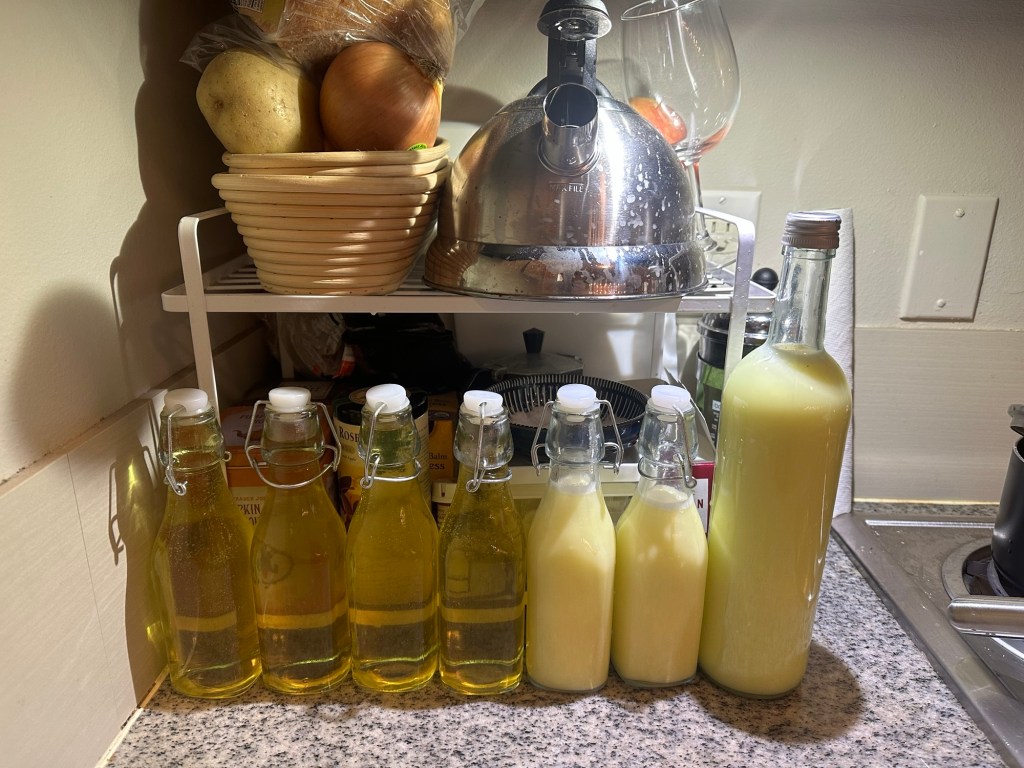
Since then I’ve expanded my range of ‘cellos to coffee, pistachio, cantaloupe, blackberry, grapefruit, orange, lime, cream, caraway and broken into gin and rum infusions. But the best is always limoncello. It gets pulled out of the freezer a few times a year on holidays. Always on New Years Eve for a toast and in the summer it gets poured over ice cream or mixed into iced tea. Sometimes served in a special small glass where you can appreciate the clear sunshine yellow. The recipe is developed more every time. I like it less sweet than most people, and in my memory the limoncello was much more sour than mine has ever been. Next time I will try adding a little juice to the simple syrup before bottling. The possibilities are endless, and so is the joy.
Recipe for Limoncello
1 16 oz mason jar and lid
Bottles for decanting, sterilized
About 10-15 large organic lemons
1 750ml bottle of neutral grain vodka. I recommend Absolut, Kirkland brand, or any vodka without a harsh burn. Staw away from potato vodka as the oils in the lemon peel won’t infuse properly.
400g sugar
400g water or cream.
Wash and dry lemons making sure to remove any waxy residue on the skin. Peel lemons and stuff as many peels as you can into the jar filling it about 3/4ths of the way. Cover with vodka and seal. Shake to incorporate and store in a cool dark place for 6-12 weeks. Shake every week or so to distill the oils in the peel and watch the color change. After about 6 weeks taste the liquid to decide if it is ready or needs more time. The peels should be noticeably bleached of color and flavor. When the infusion is ready, make the simple syrup. Heat sugar and water together to make a syrup. Strain the infusion into a bowl or large liquid measuring cup. Add half the sugar syrup, stir and taste. If you like a sweeter liquor add more syrup slowly until you reach the desired sweetness. Add a squeeze of lemon juice if you are like a sour note.
To make crema di limoncello, limoncello’s richer and more dessertlike twin, follow the same step with heavy cream.
Decant into bottles with a funnel and seal. Limoncello is best chilled and can be kept in the freezer for about a year. In my experience it rarely lasts that long. If you are having trouble finishing it by yourself, invite some friends over to help, or use it in a cocktail. It also makes a great gift in small quantities. And remember, the ABV is still very high so avoid ants and drink responsibly.
 Peasant Fare
Leave a comment